
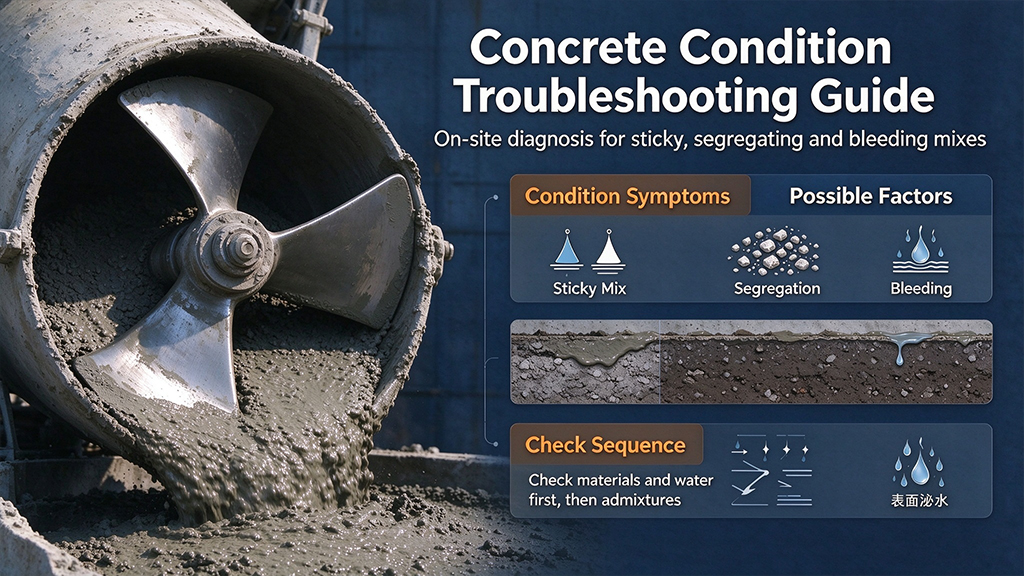
The relationship between superplasticizer polycarboxylate and the phenomena of concrete becoming sticky, spreading, and bleeding water.
Many site workers blame admixtures once concrete behaves poorly. Root causes often hide in raw materials and on-site operation details. These factors include sand moisture content, mud content, powder grading and more. Hasty judgments lock your troubleshooting direction too early.
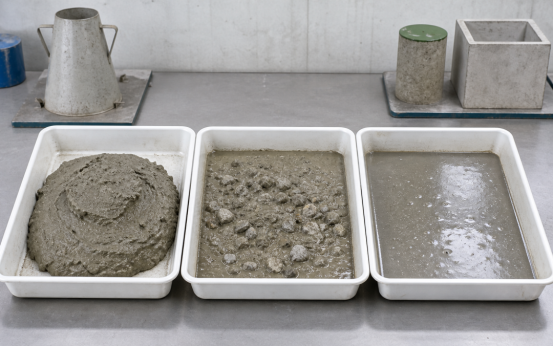
Sticky, Segregating or Bleeding Concrete: Three Common Site Troubles
Bad ymarferoldeb concrit shows mainly in three typical forms. Each symptom needs separate checks and targeted adjustment plans. Do not rush to conclude your superplasticizer polycarboxylate fails.
Sticky Concrete: High Viscosity Does Not Equal Overdosed Admixture
Sticky concrete resists pumping and cannot spread smoothly. Sufficient slump values still cannot guarantee good flow performance. High powder content or fine sand usually raises the mixture viscosity. High mud content consumes admixtures and makes the mix dull. Poor cement adaptability also triggers fast setting and tight mixes. Check raw materials before you adjust the admixture dosage.
Segregating Concrete: Loose Mix Does Not Always Mean Extra Water
Segregation means mortar cannot wrap coarse aggregates well. Many technicians suspect excessive water or high admixture dosage. Low sand ratio or broken aggregate grading causes this issue frequently. Weak water retention from admixtures worsens segregation risk. Fix sand grading first instead of simply cutting admixture dose.
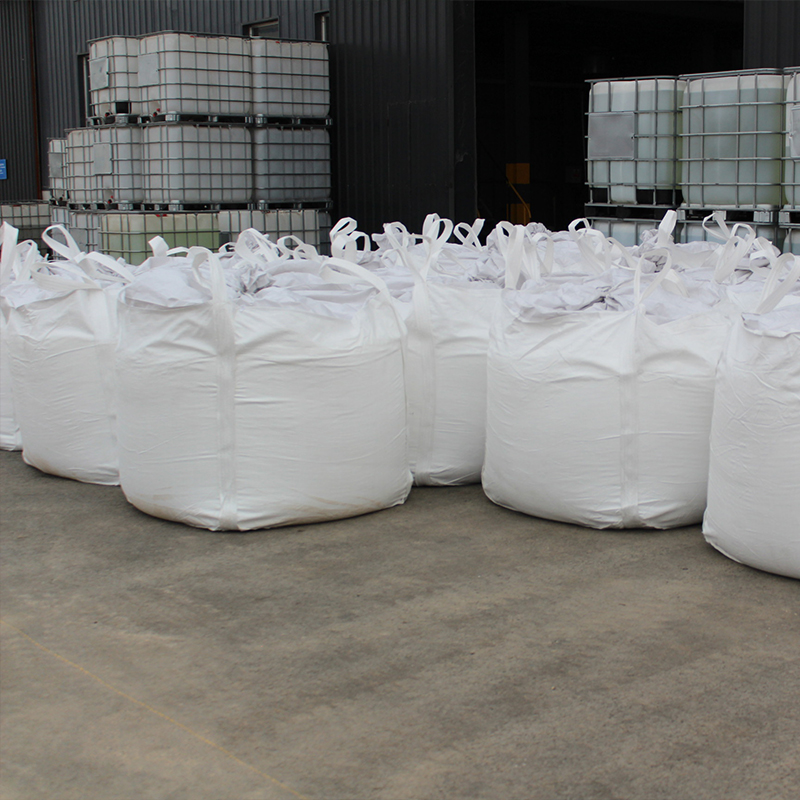
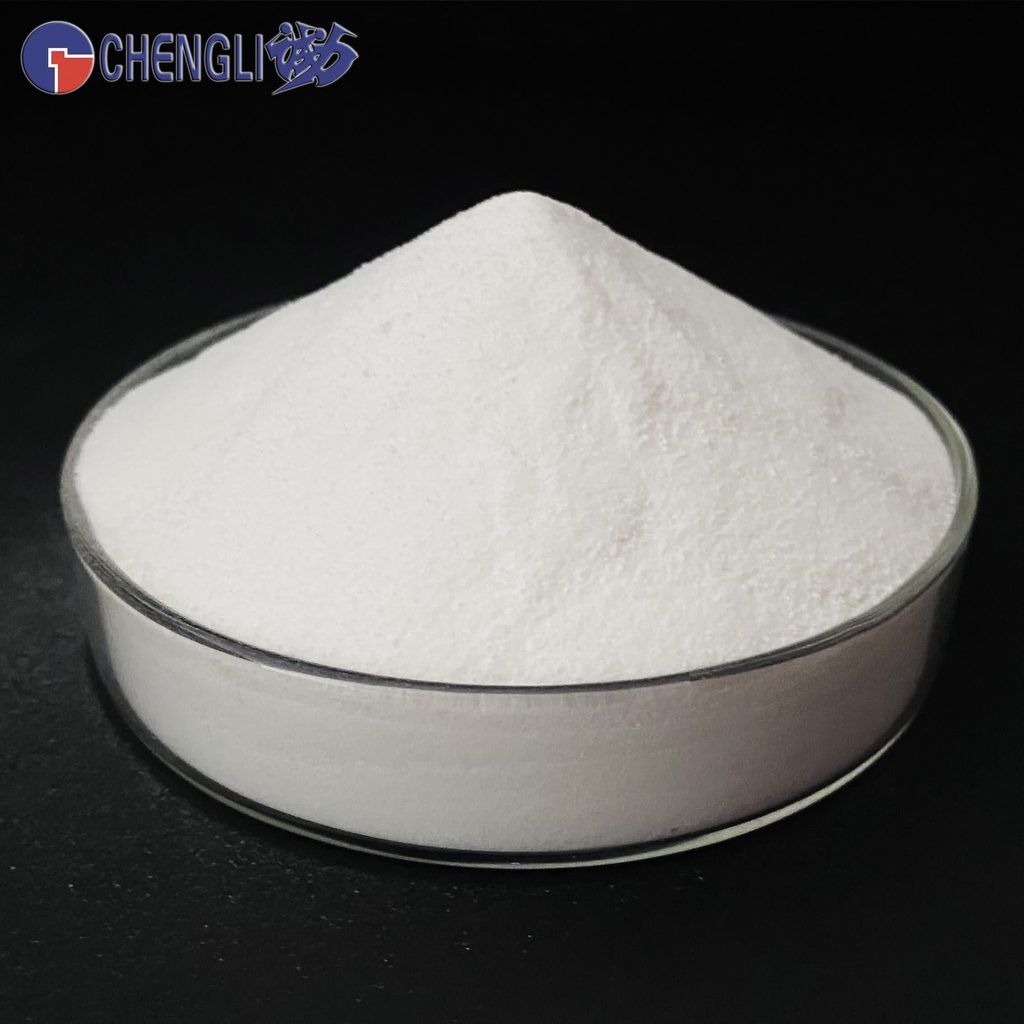
Bleeding Concrete: Surface Water Tells More Than You See
Bleeding forms water layers on the top of fresh concrete. It harms strength, durability and surface finishing quality greatly. Insufficient fine powder reduces the water holding capacity of mortar. Uncalibrated sand moisture content distorts actual water consumption. Unstable slump release may also bring late bleeding and segregation. Bleeding rarely comes from one single factor alone.
Judge Admixture Issues Through Controlled Comparison
Never judge superplasticizer polycarboxylate performance by one batch. Compare changes while keeping most raw materials unchanged. Switch admixture batches only when cement and sand stay the same. Watch colled cwymp closely during transportation and waiting periods. Check mixing time and water input if problems appear right after discharge. Record every change to locate the real root cause steadily.
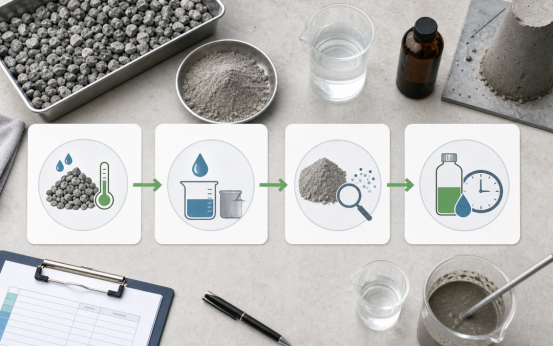
Follow a Clear Sequence Before Revising Mix Proportions
Hasty adjustments often hide problems instead of solving them. Check sand and gravel first: moisture, mud content and grading. Then inspect powder materials: cement batch and mineral admixtures. Verify actual water dosage against pre-calculated mix designs. Test superplasticizer polycarboxylate dosage and batch consistency. Finally review transport time, temperature and construction methods. Eliminate factors one by one for reliable troubleshooting results.
Qualified Admixtures Require More Than High Water Reduction Rate
High water reduction only marks the initial dispersion effect. Good cement adaptability keeps stable performance for hours. Steady colled cwymp avoids sudden collapse or late over-release. Reliable ymarferoldeb concrit simplifies pumping and placement. Great admixtures tolerate minor raw material fluctuations on site. They leave flexible adjustment space for concrete plant technicians.
Final Practical Advice for Concrete Plant Technicians
Check your superplasticizer polycarboxylate when concrete fails. But do not treat it as the only source of all site problems. Sticky, segregating and bleeding mixes need different solutions. Link symptoms, raw materials and transport time for accurate fixes. Systematic checks save you from repeated blind adjustments.