
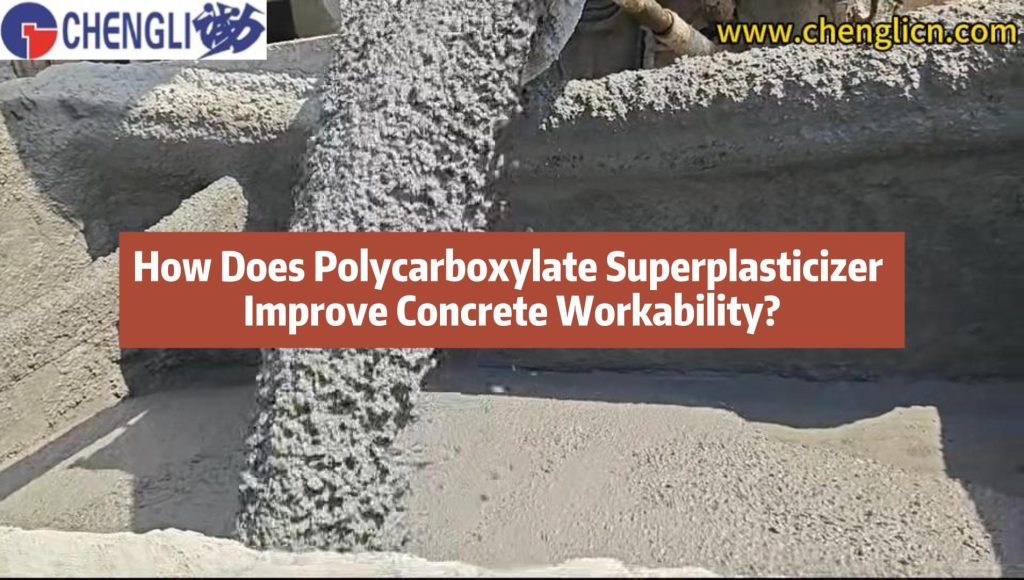
आधुनिक कंक्रीट प्रौद्योगिकी में, पॉलीकार्बोक्सिलेट सुपरप्लास्टिकाइज़र (पीसीई) एक महत्वपूर्ण नवाचार के रूप में खड़ा है। यह एक मुख्य चुनौती को संबोधित करता है: संरचनात्मक ताकत का त्याग किए बिना कार्यशीलता को बढ़ाना। निर्माण पेशेवरों के लिए, यह सामग्री कार्य स्थलों पर कंक्रीट मिश्रण के प्रदर्शन को बदल देती है। इसके अद्वितीय गुण पारंपरिक कंक्रीट में खराब कार्यशीलता के मूल कारणों को लक्षित करते हैं। इन तंत्रों को समझने से पता चलता है कि पीसीई दुनिया भर में अपरिहार्य क्यों बन गया है।
- आणविक संरचना: प्रदर्शन का आधार
पॉलीकार्बोक्सिलेट सुपरप्लास्टिकाइज़र इसमें एक विशिष्ट कंघी जैसी आणविक संरचना होती है। इस डिज़ाइन में एक मुख्य पॉलिमर श्रृंखला और कई शाखायुक्त साइड चेन शामिल हैं। मुख्य श्रृंखला में नकारात्मक रूप से आवेशित समूह होते हैं जो सीमेंट कणों से जुड़ते हैं। ये समूह एक मजबूत आधार बनाते हैं, जिससे यह सुनिश्चित होता है कि अणु कण की सतह पर मजबूती से चिपक जाए। इसके विपरीत, साइड चेन, आसपास के जल मैट्रिक्स में बाहर की ओर फैली हुई हैं।
यह कंघी संरचना पुराने सुपरप्लास्टिकाइज़र प्रकारों से मौलिक रूप से भिन्न है। यह लिग्नोसल्फ़ोनेट्स या नेफ़थलीन-आधारित मिश्रण की सीमाओं से बचाता है। साइड चेन आसन्न सीमेंट कणों के बीच एक भौतिक अवरोध प्रदान करते हैं। वे पुन: एकत्रीकरण को रोकते हैं, जो दीर्घकालिक कार्यशीलता बनाए रखने में एक महत्वपूर्ण कारक है। यह आणविक सेटअप सक्षम बनाता है पीसीई विभिन्न मिश्रण डिज़ाइनों में लगातार परिणाम देने के लिए।
- फ्लोक्यूलेशन को बाधित करना: फंसे हुए पानी को खोलना
पानी के साथ मिश्रित होने पर सीमेंट के कण स्वाभाविक रूप से फ़्लोकुलेंट क्लस्टर बनाते हैं। ये समूह अपने अंतरालों में बड़ी मात्रा में मुक्त पानी जमा कर लेते हैं। कंक्रीट मिश्रण को चिकनाई देने के लिए फंसा हुआ पानी अनुपलब्ध हो जाता है। यह घटना सीधे तौर पर कार्यशीलता को कम कर देती है, जिससे मिश्रण कठोर हो जाता है और उसे स्थापित करना कठिन हो जाता है। पीसीई लक्षित फैलाव के माध्यम से इस प्रक्रिया को बाधित करता है।
यह फ़्लोकुलेंट समूहों में प्रवेश करता है और अंतर-आणविक बलों को तोड़ता है। नकारात्मक रूप से चार्ज की गई मुख्य श्रृंखला सीमेंट कणों पर बंधन स्थलों के लिए प्रतिस्पर्धा करती है। यह फ़्लॉक्स को एक साथ रखने वाले इलेक्ट्रोस्टैटिक आकर्षण को बाधित करता है। जैसे ही गुच्छे टूटते हैं, फंसा हुआ पानी मिश्रण में निकल जाता है। यह छोड़ा गया पानी अलग-अलग सीमेंट और समुच्चय कणों को चिकनाई देता है।
यह फैलाव प्रभाव आम तौर पर पानी की मांग को 20% से 30% तक कम कर देता है। कंक्रीट कम जल-सीमेंट (w/c) अनुपात के साथ भी तरलता बरकरार रखता है। कम w/c अनुपात समवर्ती रूप से कंक्रीट की अंतिम ताकत में सुधार करता है। यह दोहरा लाभ - व्यावहारिकता और ताकत - पीसीई को अन्य मिश्रणों से अलग करता है।
- स्नेहन बढ़ाना: एक समान जल फिल्म का निर्माण
बिखरे हुए सीमेंट कण प्रत्येक एक समान जल फिल्म कोटिंग विकसित करते हैं। पीसीई पार्श्व श्रृंखलाएँ आसन्न कणों के बीच एक सुसंगत दूरी बनाए रखती हैं। यह अंतर यह सुनिश्चित करता है कि मिश्रण और प्लेसमेंट के दौरान पानी की फिल्म बरकरार रहे। चिकनाई प्रभाव कणों को एक-दूसरे से आसानी से गुज़रने की अनुमति देता है। यहां तक कि भारी समुच्चय भी मिश्रण के भीतर अधिक स्वतंत्र रूप से चलते हैं।
ठेकेदार इसे बेहतर प्रवाह क्षमता और प्रसार क्षमता के रूप में देखते हैं। कंक्रीट अधिक आसानी से फॉर्मवर्क में डाला जाता है, यहां तक कि जटिल या संकीर्ण खंडों में भी। यह अत्यधिक कंपन के बिना कोनों और अंतरालों को भरता है। इससे श्रम तीव्रता कम हो जाती है और निर्माण कार्यक्रम में तेजी आती है। जल फिल्म प्लेसमेंट के दौरान कणों के बीच घर्षण को भी कम करती है।
हमारी पेशेवर तकनीकी टीम हमारे उत्पादों का उपयोग करते समय आपके सामने आने वाली किसी भी समस्या का समाधान करने के लिए 24/7 उपलब्ध है। हम आपके सहयोग के लिए तत्पर हैं!