
Water reducer Abstract
Water reducer acts as a critical admixture for concrete strength and pumpability. It optimizes concrete workability for construction. This paper analyzes its working mechanism and influencing factors. It introduces a test method to find the optimal dosage. The method verifies compatibility between पानी कम करने वाला and cement. It guarantees construction quality and cuts project costs reliably.
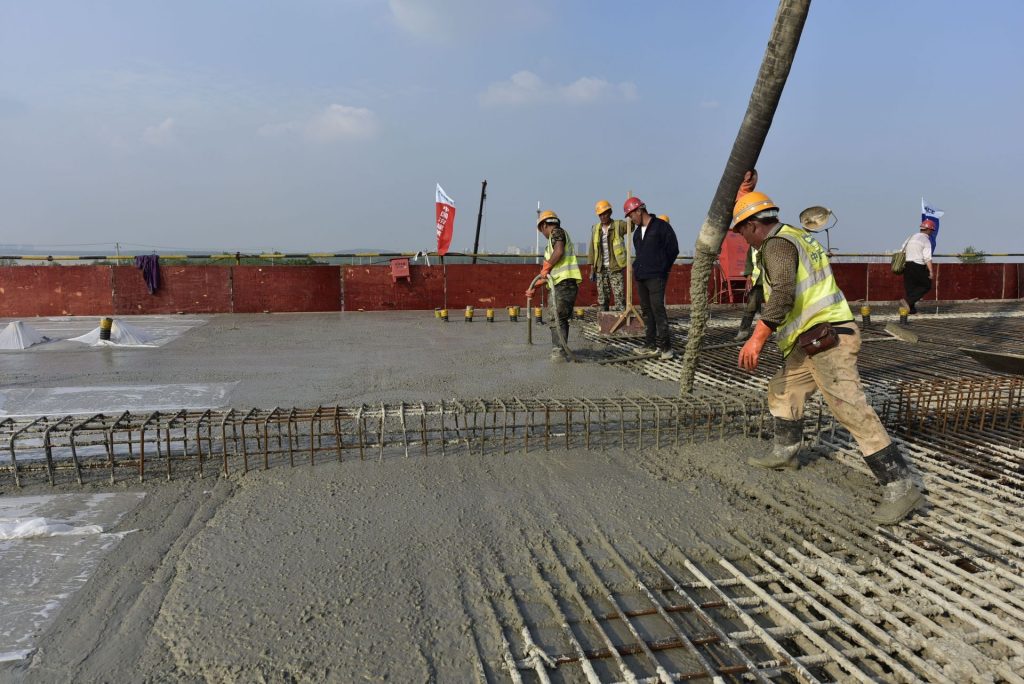
Water reducer secures concrete strength and meets pumping requirements. It greatly improves concrete workability on construction sites. Pumpable concrete needs extra performance besides standard concrete properties. It demands good fluidity, workability and low slump loss. It also resists bleeding and segregation. High-performance concrete projects require precise tests. Engineers must confirm the optimal dosage of पानी कम करने वाला. They check compatibility between पानी कम करने वाला and cement. This key step stabilizes quality and controls construction expenses.
Special structural needs expand the use of high-flow concrete. Typical cases include cast-in-place piles and high-rise pumping concrete. Two mainstream ways boost concrete fluidity at present. Builders raise cement content or add पानी कम करने वाला into mixes.
Higher cement dosage can lift concrete slump. It increases water consumption even at a fixed water-cement ratio. This change harms concrete mix cohesion and durability. Excess trapped water forms pores after concrete hardens. Pores weaken concrete strength and speed steel corrosion. This method is not recommended for practical projects. Proper addition of पानी कम करने वाला avoids these drawbacks.
1. Working Mechanism of Concrete Water Reducer
Cement forms flocculated structures once mixed with water. These structures trap 10% to 30% of mixing water inside. Trapped water lowers the fluidity of fresh concrete mixes. Proper पानी कम करने वाला molecules adsorb onto cement particle surfaces. Their hydrophilic groups stretch toward the aqueous solution. Ionization brings identical charges to cement particle surfaces. Rising पानी कम करने वाला concentration strengthens electrostatic repulsion. Repulsive force breaks cement flocculation and releases trapped water. Released water improves concrete fluidity and compactness effectively. A suitable पानी कम करने वाला dosage reduces the water-cement ratio. It cuts cement consumption and raises early concrete strength. Early strength shortens formwork turnover and construction cycles. It finally lowers overall project investment.
Compatibility exists between high-efficiency पानी कम करने वाला and concrete components. Cement creates the biggest impact on matching performance. One cement type behaves differently with various high-efficiency पानी कम करने वाला products. One high-efficiency पानी कम करने वाला also varies across cement batches. Compatibility differences alter concrete rheological and working properties. They affect concrete strength and long-term durability. Engineers run comparative tests for पानी कम करने वाला selection and dosage. Test results confirm the optimal पानी कम करने वाला dosage for concrete mixes.
2. Factors Affecting Water Reducer Performance
Cement clinker compositions differ among cement brands. Higher MgO content amplifies पानी कम करने वाला impacts on concrete. It raises risks of microcracks in hardened concrete. High-efficiency पानी कम करने वाला shows selective adsorption on cement clinker minerals. C₃A immediately forms thick adsorption layers upon contact with water. More C₃A consumes more high-efficiency पानी कम करने वाला. C₃S and C₂S adsorb far less पानी कम करने वाला. Uneven adsorption changes the dispersion effect of high-efficiency पानी कम करने वाला. Cement with high C₃A content has poor compatibility with पानी कम करने वाला. It causes insufficient or even lost water reduction effects. Test data shows extended setting time for concrete mixed with पानी कम करने वाला.
Low water-cement ratio systems differ greatly from plain cement mortar. Reduced water cuts gypsum dissolution in cement paste. Low gypsum concentration fails to control C₃A hydration. This triggers flash set and fast slump loss. High-efficiency पानी कम करने वाला disturbs cement hydration kinetics. It reduces gypsum solubility in the liquid phase. Sulfate ion shortage lets sulfonate groups bind with C₃A. Binding consumes free पानी कम करने वाला and destroys cement dispersion.
It accelerates slump loss of fresh concrete mixes. Cement fineness and particle grading influence पानी कम करने वाला dispersion. Finer cement gains larger fluidity improvement at fixed पानी कम करने वाला dosage. Alkali content strongly affects fluidity of cement-पानी कम करने वाला systems. Higher alkali content reduces concrete mix fluidity. High-alkali cement weakens water reduction performance of high-efficiency पानी कम करने वाला.
3. Test Method for Optimal Water Reducer Dosage via Cement Paste Fluidity
Compatibility works in both directions between cement and पानी कम करने वाला. Water reducer type and quality dominate matching performance. Engineers select पानी कम करने वाला based on cement compatibility and construction demands. Poor compatibility between high-efficiency पानी कम करने वाला and cement causes these problems:
- Abnormal concrete setting occurs during mixing.
- Fresh concrete suffers severe slump loss.
- Obvious bleeding, stratification and segregation appear in mixes.
- High-efficiency पानी कम करने वाला loses part or all water reduction capacity.
- Concrete strength gains stall or drop at all curing ages.
- Concrete shrinkage rises sharply and induces cracking.
Engineers avoid these compatibility issues during पानी कम करने वाला selection. Water reducer dosage relates closely to cement consumption. It also depends on cement physical and chemical features. Traditional dosage follows product manuals and cement mass percentage. Cement chemical composition shifts between batches. Optimal पानी कम करने वाला dosage changes with cement sources. Pure percentage-based dosage cannot guarantee stable water reduction.
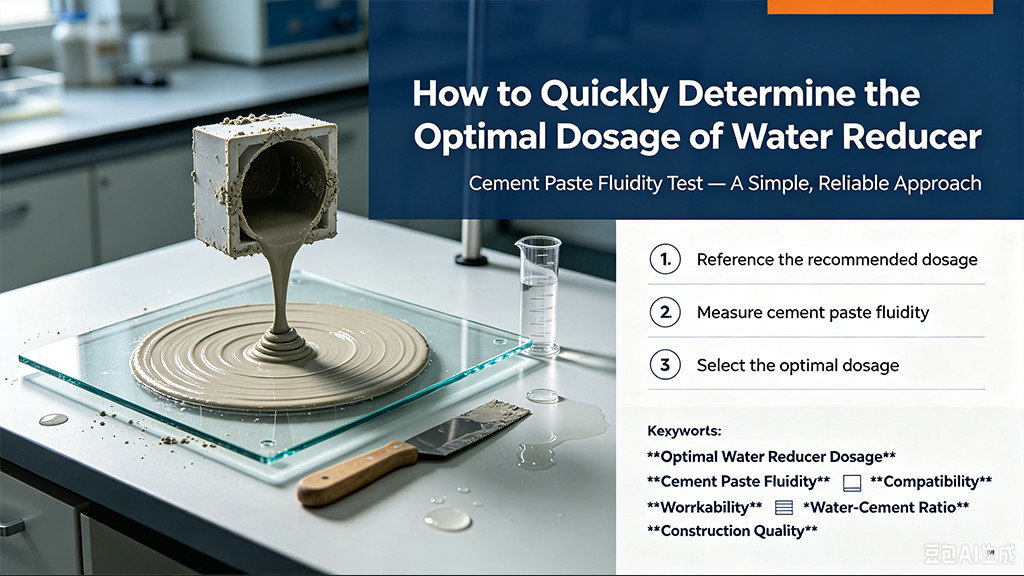
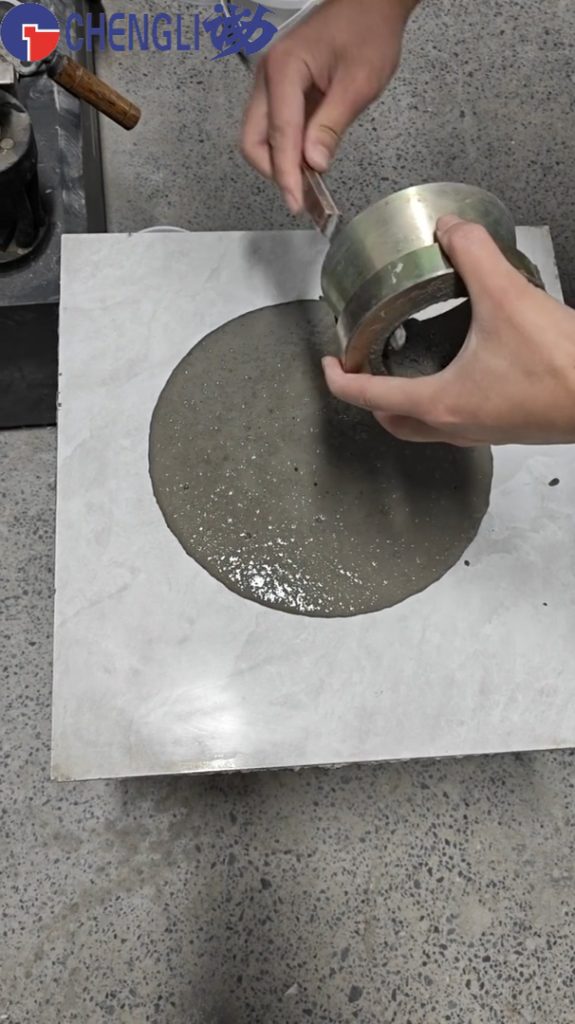
It often wastes पानी कम करने वाला materials in field practice. The author adopts cement paste fluidity tests after repeated trials. This method reliably identifies the optimal पानी कम करने वाला dosage. Operators reference the recommended dosage from पानी कम करने वाला manufacturers. They weigh 300 g cement, water and पानी कम करने वाला precisely. Operators mix cement, water and पानी कम करने वाला following standard procedures. They fill the fresh paste into a cone mold on clean glass. Operators lift the mold gradually and observe paste spreading behavior. They check whether fluidity meets pumping concrete requirements. Operators record water reduction rates at different पानी कम करने वाला dosages. They compare data and pick the best matching combination.
Water reducer addition sequence affects final water reduction performance. Comparative trials verify this rule clearly. For Longda high-efficiency पानी कम करने वाला, sequence cement → पानी कम करने वाला → water yields 22–23 cm spread. Sequence cement → water, then delayed पानी कम करने वाला addition yields 25–27 cm spread. Retarded addition improves compatibility between cement and पानी कम करने वाला. It maximizes the dispersion function of पानी कम करने वाला. Field construction follows this delayed addition principle. Add पानी कम करने वाला after short mixing to get optimal effects.
4. Conclusion
Cement chemical and physical properties vary by brand and batch. Engineers must test to confirm suitable पानी कम करने वाला and its optimal dosage. Manual percentage values alone cannot replace laboratory tests. The cement paste fluidity method determines पानी कम करने वाला dosage simply and reliably. It stabilizes construction quality and cuts project costs. It helps achieve ideal outcomes for concrete construction projects.