
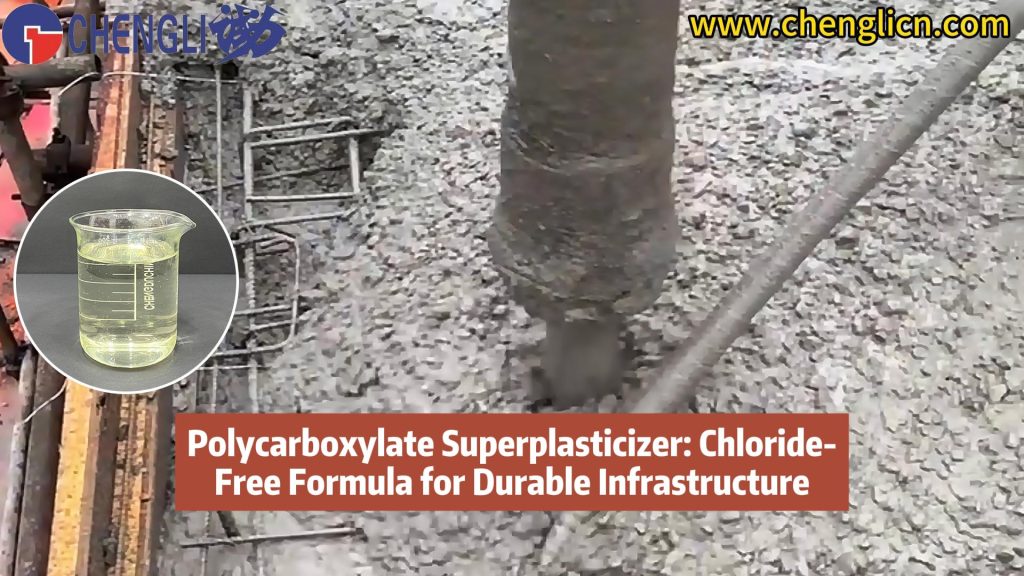
Hin falda ógn klóríðs í steypubyggingu
Ending innviða byrjar með efnum sem halda mannvirkjum saman. Klóríðjónir, algengar í sumum steypuaukefnum, tæra stálstyrkingu með tímanum. Þessi tæring stækkar málminn, sprungur steypu og styttir líftíma mannvirkis um áratugi. Býr sveitarfélaga, strandvegir og vatnshreinsistöðvar verða oft fórnarlamb þessa máls. Verkfræðingar og verktakar leita nú lausna sem forðast slíka áhættu algjörlega. Polycarboxylate superplasticizer með klóríðlausri formúlu kemur fram sem breytileiki í þessari leit.
Klórmengun er ekki bara viðhaldsvandamál heldur efnahagslegt. Bandaríska þjóðvegastjórnin áætlar að 20 milljörðum dala sé varið árlega í klóríðtengdar steypuviðgerðir. Hefðbundnir vatnsrennslar treysta oft á klóríð til að auka vinnsluhæfni, sem skapar jafnvægi á milli þæginda og langlífis. Þessi málamiðlun er ekki lengur skynsamleg á tímum sjálfbærrar byggingar. Klóríðlaust Polycarboxylate superplasticizer útilokar þessa málamiðlun og skilar afköstum án falinna skemmda á byggingunni.
Hvernig klóríðlaust pólýkarboxýlat ofurmýkingarefni eykur afköst steypu
Klóríðlaust Polycarboxylate superplasticizer virkar með því að dreifa sementögnum jafnt í blöndunni. Þessi dreifing dregur úr núningi milli agna, sem gerir steypu kleift að flæða auðveldara án aukavatns. Dæmigerð blanda við Polycarboxylate superplasticizer getur dregið úr vatnsnotkun um 30% til 40% miðað við ómeðhöndlaða steypu. Minna vatn þýðir þéttara fylki, sem þolir náttúrulega innsog raka og efnavef.
Þessi formúla bætir einnig vinnuhæfni, mikilvægur þáttur fyrir flóknar byggingarverkefni. Starfsmenn geta sett og klárað steypu á skilvirkari hátt, sem dregur úr vinnutíma og villum. Háhýsi, þar sem dæla þarf steypu í miklar hæðir, hagnast verulega. Vökvi steypu sem er meðhöndluð með ofurmýkingarefni með pólýkarboxýlati kemur í veg fyrir stíflur í slöngum og tryggir samræmda staðsetningu utan um styrktarjárn. Ekkert klóríðinnihald þýðir að þessi ávinningur kemur án þess að hætta á tæringu í framtíðinni.
Styrktaraukning undirstrikar enn frekar gildi klóríðlauss Polycarboxylate superplasticizer. Rannsóknarstofupróf sýna að steypa með þessu aukefni eykur 20% meiri þrýstistyrk eftir 28 daga. Snemma styrkleikaþróun er einnig aukin, sem gerir kleift að fjarlægja mótun hraðar og hraða verkefninu. Framleiðendur forsteyptra steypu treysta sérstaklega á þennan eiginleika til að auka framleiðslu skilvirkni. Sambland af styrk og endingu gerir efnið tilvalið fyrir burðarvirki eins og bílastæðahús og iðnaðarvöruhús.
Raunveruleg forrit: Frá brúm til háhýsa
Innviðir stranda munu hagnast mest á klóríðlausu Polycarboxylate superplasticizer. Sjávarúði og salthlaðinn loft koma gríðarlegu klóríði fyrir bryggjur og göngustíga. Nýja gámastöðin í Shanghai höfn notaði 5.000 tonn af Polycarboxylate superplasticizer-meðhöndluð steinsteypa í smíði þess. Fimm árum síðar sýna skoðanir núll styrkingartæringu, algjör andstæða við eldri skautanna í nágrenninu. Verkfræðingar rekja þennan árangur beint til klóríðlausu formúlunnar.
Köld svæði njóta einnig góðs af eiginleikum þessa ofurmýkingarefnis. Vegagerðin í Kanada notar hann við vetrarviðgerðir á þjóðvegum. Klóríð-undirstaða afísefni versna oft steypu niðurbrot, en Polycarboxylate superplasticizer-meðhöndlaðar blöndur standast bæði frost-þíðingarlotur og afísingarskemmdir. Hluti af þjóðvegi 401 í Ontario er lagður aftur með Polycarboxylate superplasticizer steypa sýndi 60% minni sprungu eftir tvo erfiða vetur. Þessi ending þýðir færri lokanir og lægri viðhaldskostnað fyrir flutningafyrirtæki.
Háhýsi íbúðarverkefni í Dubai hafa tekið upp klóríðfrítt Polycarboxylate superplasticizer sem staðall. Vinnanleiki efnisins auðveldar steypusteypu fyrir háar súlur og þunnar plötur. Ending þess tryggir að þessi mannvirki standist miklar hitasveiflur eyðimerkurinnar. Hönnuðir taka fram að þó að aukefnið kosti aðeins meira fyrirfram, þá réttlætir 50 ára áætluð framlenging líftíma fjárfestingarinnar. Íbúar njóta einnig góðs af hljóðlátari, stöðugri byggingum með minni hættu á burðarvirkjum.
Tilraunasönnun: Ending sem stenst prófið
Óháð prófunaraðstaða hefur sannreynt frammistöðu klóríðfrítt Polycarboxylate superplasticizer. Kínverska byggingarrannsóknaakademían gerði 10 ára rannsókn á steinsteypusýnum. Þeir sem eru meðhöndlaðir með klóríðlausum Polycarboxylate superplasticizer hélt 92% af upprunalegum styrk eftir áratug af útsetningu fyrir erfiðum aðstæðum. Sýni með hefðbundnum aukefnum sem byggjast á klóríði héldu aðeins 68% af styrkleika sínum.
Frost-þíðuþolpróf staðfesta enn frekar seiglu efnisins. Steinsteypt sýni gangast undir 500 frystingar-þíðingarlotur við aðstæður á rannsóknarstofu. Klóríðlaust Polycarboxylate superplasticizer sýni sýndu enga sjáanlegan spuna eða styrkleikatap. Aftur á móti mynduðu sýni með klóríðaukefnum djúpar sprungur og misstu 35% af þrýstistyrk sínum. Þessar niðurstöður gera aukefnið að besta vali fyrir svæði með alvarlegt vetrarloftslag.
Tæringarprófanir með innbyggðri stálstyrkingu segja sömu sögu. Vísindamenn fylgdust með stálstöngum í steypublöndu í fimm ár. Bars í klóríðlausum Polycarboxylate superplasticizer steypa sýndi engin merki um ryð. Stöngir í blöndum með 0,5% klóríðinnihald (algengt magn í gömlum aukefnum) mynduðu verulega tæringu, með 12% minnkun á þversniðsflatarmáli. Þessi gögn styrkja hvers vegna verkfræðingar setja klóríðlausar lausnir í forgang.
Framtíð sjálfbærrar innviða með klóríðfríu pólýkarboxýlat ofurmýkingarefni
Þegar alþjóðlegt byggingarmál færist í átt að sjálfbærni, klóríðfrítt Polycarboxylate superplasticizermun gegna sífellt mikilvægara hlutverki. Ríkisstjórnir eru að uppfæra byggingarreglur til að takmarka notkun klóríðs í innviðum. Ný byggingarvörureglugerð Evrópusambandsins (CPR) takmarkar klóríðinnihald í steypu fyrir opinberar framkvæmdir. Þessi eftirlitsaðgerð ýtir undir eftirspurn eftir Polycarboxylate superplasticizer og svipuð hágæða aukefni.
Framleiðendur eru einnig að gera nýjungar til að gera klóríðfrítt Polycarboxylate superplasticizer enn aðgengilegri. Nýjar framleiðsluaðferðir hafa lækkað kostnað um 15% á undanförnum þremur árum. Magnframboðsvalkostir gera aukefnið nú framkvæmanlegt fyrir stór verkefni eins og stíflur og flugvelli. Sum fyrirtæki bjóða upp á sérsniðnar samsetningar sem eru sérsniðnar að sérstöku loftslagi og auka notkun þess enn frekar.
Innviðir eru burðarás nútímasamfélags og aldrei ætti að skerða endingu þeirra. Klóríðlaust Polycarboxylate superplasticizer skilar þeim árangri sem verktakar þurfa án falinna áhættu hefðbundinna aukefna. Allt frá strandhöfnum til skýjakljúfa í þéttbýli, þetta efni er að byggja upp viðkvæmari framtíð. Að velja það er ekki bara tæknileg ákvörðun - það er fjárfesting í innviðum sem mun þjóna samfélögum í kynslóðir.