
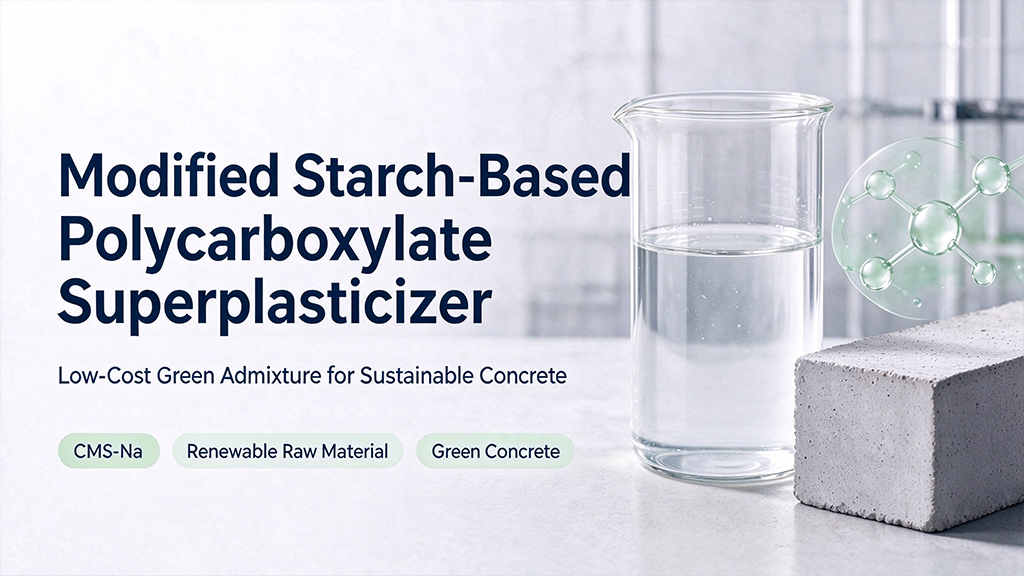
Modified starch‑based polycarboxylate superplasticizer delivers a practical low‑cost route for green concrete admixtures. Traditional ಪಾಲಿಕಾರ್ಬಾಕ್ಸಿಲೇಟ್ ಸೂಪರ್ಪ್ಲಾಸ್ಟಿಸೈಜರ್ relies heavily on expensive polyether macromonomers. These petroleum‑sourced raw materials continuously push up production costs. Manufacturers search renewable feedstocks to replace part of synthetic monomers. Modified natural starch polymers offer a stable, eco‑friendly alternative.
New research cuts raw material costs for ಪಾಲಿಕಾರ್ಬಾಕ್ಸಿಲೇಟ್ ಸೂಪರ್ಪ್ಲಾಸ್ಟಿಸೈಜರ್ with renewable starch materials
ಪಾಲಿಕಾರ್ಬಾಕ್ಸಿಲೇಟ್ ಸೂಪರ್ಪ್ಲಾಸ್ಟಿಕೈಜರ್ acts as a vital admixture for modern concrete projects. It delivers strong dispersion for precast components and ready‑mix concrete. Traditional synthesis relies on pricey polyether macromonomers. High monomer costs keep pushing admixture production expenses upward. Industry researchers hunt cheaper, renewable substitutes for synthetic monomers. Modified natural polymers offer a green path to lower production costs.
Carboxymethyl Starch Sodium: Tuning Starch for Better Compatibility
Sodium carboxymethyl starch (CMS‑Na) serves as our core replacement feedstock. Manufacturers make it from native starch via oxidation, acidification and etherification. This anionic polymer dissolves easily but carries high intrinsic viscosity. Raw CMS‑Na mixes poorly with polyether monomers and fails directly in synthesis. Our study breaks long starch chains to fix viscosity and stability issues. We compare acid hydrolysis and enzymatic degradation side by side. α‑amylase treatment becomes our preferred chain‑cutting method. This enzyme snips internal glycosidic bonds inside large starch molecules. Shorter polymer chains reduce overall viscosity of the liquid system. It also avoids excess chloride ions and sediment from acid breakdown. The stable blend fits standard ಪಾಲಿಕಾರ್ಬಾಕ್ಸಿಲೇಟ್ ಸೂಪರ್ಪ್ಲಾಸ್ಟಿಸೈಜರ್ synthesis workflows.
Composite Production Process and Core Product Performance
We blend degraded CMS‑Na with isoprenyl polyoxyethylene ether and acrylic acid. Reactions run under mild low‑temperature conditions. The final product is our new starch‑modified ಪಾಲಿಕಾರ್ಬಾಕ್ಸಿಲೇಟ್ ಸೂಪರ್ಪ್ಲಾಸ್ಟಿಸೈಜರ್ PC₂. Infrared tests confirm CMS‑Na stays physically mixed, not chemically copolymerized. This new admixture brings clear strengths versus standard polyether grades. It works well with most ordinary Portland cement types on the market. Cement paste rarely bleeds water or sticks to mixing equipment. It retains flow properties and slows fluidity loss over time. Built‑in mild retarding action delays early cement hydration. This trait suits construction jobs requiring adjusted setting times. It lifts water reduction efficiency and improves fresh concrete workability. Hardened concrete gains stable long‑term mechanical strength. No obvious damage appears to the concrete’s final structural performance.
Outlook for Industrial Adoption
Modified starch replaces part of petroleum‑based polyether macromonomers. Renewable farm resources cut reliance on fossil chemical feedstocks. The formula slashes material costs for ಪಾಲಿಕಾರ್ಬಾಕ್ಸಿಲೇಟ್ ಸೂಪರ್ಪ್ಲಾಸ್ಟಿಸೈಜರ್. Starch polymers still carry notable practical limitations. Source location and batch variation hurt consistent product performance. Teams must refine degradation and blending recipes to narrow gaps. Green and low‑carbon goals guide the whole construction admixture sector. Starch‑modified admixtures match demand for low‑cost, low‑energy concrete. Refined processes will unlock use in ready‑mix concrete and road subbases. Engineers can deploy this material for large backfill works in the future. It supplies a realistic technical route for greener concrete admixtures.