
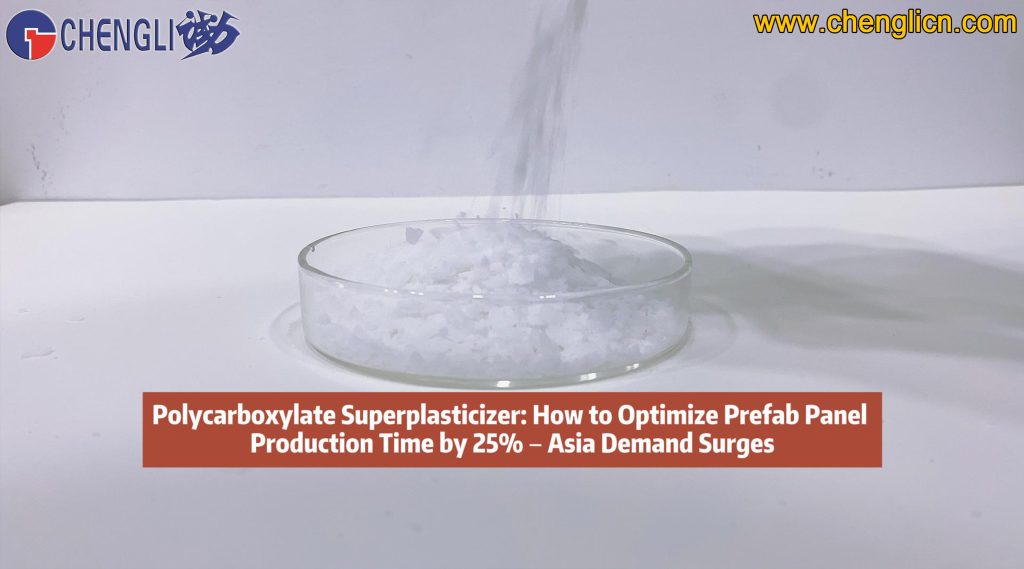
In the global prefab construction boom, Polycarboxylate Superplasticizer has become a game-changer for manufacturers seeking efficiency gains. Many enterprises in Asia are scrambling to adopt this third-generation concrete admixture, as it effectively optimizes prefab panel production time by 25% while cutting material costs. This article will break down how to leverage its core properties to achieve peak production efficiency, catering to the surging demand for high-performance admixtures in Asian infrastructure projects.
Why Polycarboxylate Superplasticizer Leads Prefab Panel Production Efficiency
Polycarboxylate Superplasticizer stands out from traditional admixtures for its unique molecular structure. It disperses cement particles evenly, reducing friction between them during mixing. This dispersion cuts mixing time by 15% compared to conventional options. Most prefab factories in Asia report smoother concrete flow after adding this admixture.
Its excellent slump retention is another key advantage for prefab production. Concrete maintains workability for 8+ hours in 35℃+ Asian heat. This means workers can pour more panels without rushing to avoid premature setting. No more wasted concrete or rework due to slump loss mid-production.
Early strength development also boosts efficiency significantly. Prefab panels using Polycarboxylate Superplasticizer reach脱模 strength 20% faster. Factories can turn over molds quicker, increasing daily output without extra equipment. This aligns perfectly with Asia’s fast-paced prefab market growth.
Unlike older admixtures, it works seamlessly with high-strength concrete. Modern prefab panels require C60+ concrete for durability. Polycarboxylate Superplasticizer ensures this strength while keeping production fast. It eliminates the trade-off between speed and structural quality.
Step-by-Step Guide to Optimize Prefab Production Time by 25%
Start with precise dosage control for best results. Use 0.8% to 1.5% of Polycarboxylate Superplasticizer relative to cement weight. Too little won’t cut production time; too much weakens panel strength. Most Asian factories test small batches first to find the optimal ratio.
Adjust your mixing sequence to maximize efficiency. Mix aggregates and cement dry for 30 seconds first. Add water and Polycarboxylate Superplasticizer together afterward. Mix for 2-3 minutes until the concrete reaches a smooth, flowing consistency. This step alone saves 5 minutes per batch.
Optimize pouring and molding processes next. The admixture’s high fluidity lets you pour concrete faster. Use gravity pouring instead of mechanical pumping for small to medium panels. This reduces setup time and minimizes equipment wear. Workers can fill 3 more molds per hour with this method.
Speed up curing without sacrificing quality. Polycarboxylate Superplasticizer accelerates early strength gain. Use ambient temperature curing in Asia’s warm climate instead of steam curing. This cuts curing time from 24 hours to 18 hours. It also reduces energy costs by 30%.
Monitor and adjust for consistent results. Check slump every 2 hours to ensure workability. Keep records of dosage, mixing time, and curing conditions. Tweak ratios slightly for different cement types or weather changes. This consistency ensures the 25% efficiency gain every day.
Polycarboxylate vs. Other Superplasticizers: A Practical Comparison
Polycarboxylate Superplasticizer outperforms naphthalene-based options in prefab production. Naphthalene-based superplasticizers only cut production time by 10%, half of polycarboxylate’s 25%. They also lose slump faster, leading to more wasted concrete in hot Asian weather.
Lignosulfonate admixtures fall even further behind. They improve production time by just 8% and require higher dosages. This increases material costs by 12% compared to Polycarboxylate Superplasticizer. They also create more air bubbles, requiring extra finishing work.
Cost-effectiveness tilts firmly toward Polycarboxylate Superplasticizer. While it costs 5% more upfront, the 25% efficiency gain offsets this quickly. Asian factories report ROI within 2 months of switching. Naphthalene and lignosulfonate options never reach this level of value.
Environmental compliance matters for Asian exports. Polycarboxylate Superplasticizer is low-VOC and biodegradable. It meets EU and US green building standards, critical for prefab panel exports. Naphthalene-based admixtures often fail these compliance tests, limiting market access.
Compatibility with recycled materials adds another edge. Many Asian prefab factories use recycled aggregates to cut costs. Polycarboxylate Superplasticizer works seamlessly with these materials. Lignosulfonate admixtures cause segregation, making recycled aggregates unusable.
Asian Case Study: How a Prefab Factory Cut Production Time by 25%
Guangzhou Hengda Prefab Co., Ltd. faced bottlenecks in 2024. The Chinese factory produced 100 prefab panels daily with a 8-hour production cycle per batch. It struggled to meet surging demand from Southeast Asian infrastructure projects. Costs rose as overtime hours increased.
The factory switched to Polycarboxylate Superplasticizer in March 2024. Engineers tested three dosages before settling on 1.2% relative to cement weight. They adjusted the mixing sequence to align with the admixture’s properties. Workers received 1-day training on the new process.
Results appeared within the first week. Production cycle per batch dropped from 8 hours to 6 hours. Daily output jumped from 100 panels to 125 panels, a 25% increase. Wasted concrete fell from 5% to 2% due to better slump retention. Overtime costs decreased by 40%.
Long-term benefits emerged over three months. Curing time shortened by 6 hours, reducing energy use for ambient curing. The factory expanded exports to Vietnam and Malaysia. It secured a $2 million contract for prefab panels using the efficiency gains.
A second case in Vietnam confirms these results. Ho Chi Minh Prefab Manufacturing Plant adopted the same admixture in June 2024. It cut production time by 25% and increased monthly revenue by $80,000. Workers reported easier handling and fewer quality issues.
Both factories noted improved worker satisfaction. Faster production reduced fatigue and overtime. The consistent, smooth concrete mix minimized physical strain. This led to a 15% decrease in staff turnover, another hidden cost savings.
Common Mistakes to Avoid When Using Polycarboxylate Superplasticizer
Don’t use too much admixture to speed up production further. Excess dosage weakens panel strength by up to 10%. It also creates surface defects like cracks and discoloration. Stick to the 0.8%-1.5% range for optimal results.
Avoid mixing Polycarboxylate Superplasticizer with other admixtures blindly. Some combinations cause slump loss or strength reduction. Test compatibility in small batches before full-scale use. Most Asian factories keep a compatibility chart on-site.
Don’t skip small-batch testing when changing cement suppliers. Different cement types react differently to the admixture. A dosage that works for one cement may fail for another. Test 50kg batches first to adjust ratios.
Don’t neglect storage conditions for the admixture. Keep it in a cool, dry area away from direct sunlight. High temperatures degrade its performance, reducing efficiency gains. Asian factories often store it in air-conditioned warehouses.
Avoid rushing the curing process. While Polycarboxylate Superplasticizer speeds up early strength, don’t脱模 panels too soon. Wait until they reach 70% of design strength to prevent damage. Use a strength tester to confirm readiness.
Conclusion: Seizing Asia’s Booming Demand with Polycarboxylate Superplasticizer
Asia’s prefab construction market grows at 18% annually, driven by infrastructure and urbanization. Manufacturers need every efficiency gain to stay competitive. Polycarboxylate Superplasticizer delivers a 25% reduction in production time, a game-changer for the industry.
Its advantages over traditional admixtures—speed, cost-effectiveness, and compliance—make it the top choice. Asian factories that switch see fast ROI and expanded export opportunities. The case studies from China and Vietnam prove its real-world value.
Following the step-by-step guide and avoiding common mistakes ensures success. Precise dosage, proper mixing, and smart curing maximize the admixture’s benefits. Workers adapt quickly, and the efficiency gains compound over time.
Polycarboxylate Superplasticizer isn’t just an admixture—it’s a strategic tool. It helps Asian prefab manufacturers meet surging demand, cut costs, and compete globally. For any factory looking to optimize production, this third-generation admixture is the solution.
Vårt profesjonelle tekniske team er tilgjengelig 24/7 for å løse eventuelle problemer du kan støte på mens du bruker produktene våre. Vi ser frem til ditt samarbeid!