
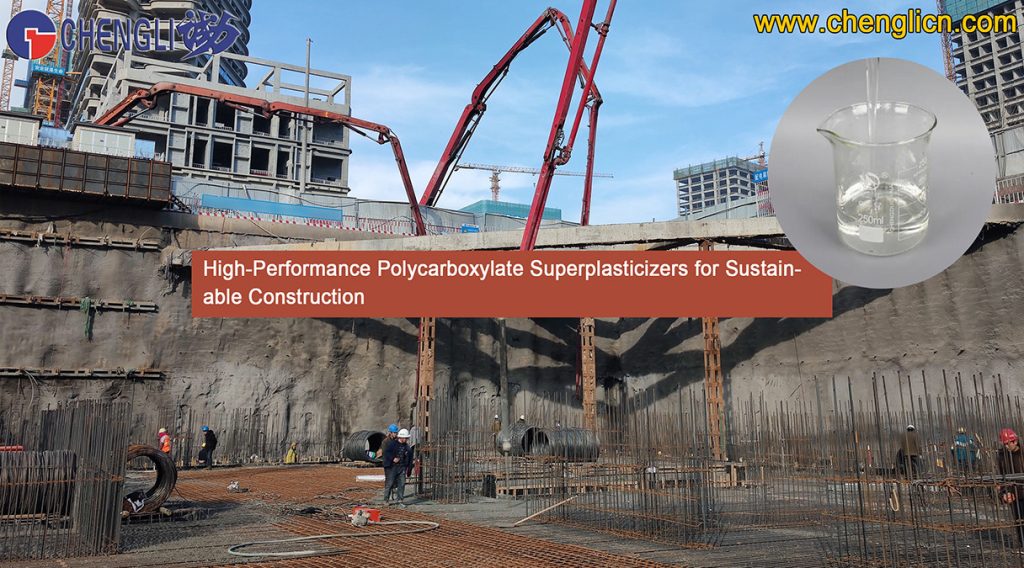
Balancing Strength, Efficiency, and Environmental Responsibility in Modern Concrete
Sustainable construction has become a global priority in recent years. It focuses on reducing environmental impact while ensuring structural durability. High-performance polycarboxylate superplasticizers play a key role in this transition. They transform concrete properties without sacrificing sustainability goals.
polycarboxylate superplasticizers are third-generation concrete admixtures with unique comb-like molecular structures. Their design allows precise control over concrete workability and strength. Unlike traditional superplasticizers, they work efficiently at low dosages. This efficiency makes them a cost-effective choice for green building projects.
The core function of polycarboxylate superplasticizers lies in their ability to reduce water content in concrete. They disperse cement particles evenly through steric hindrance and electrostatic repulsion. This dispersion eliminates the need for excess water to maintain flowability. Lower water-cement ratios directly boost concrete strength and durability.
Modern polycarboxylate superplasticizer formulations prioritize environmental sustainability in their synthesis. Researchers now use biomass materials to replace petrochemical raw materials. These biomass-based polycarboxylate superplasticizers reduce reliance on nonrenewable resources. They also minimize carbon emissions during production.
Green synthesis methods further enhance the eco-friendliness of polycarboxylate superplasticizers. Mechanochemical internal mixing polymerization is one such innovative approach. It consumes less energy than traditional aqueous solution polymerization. This method also produces high-concentration polycarboxylate superplasticizers with minimal waste.
High-performance polycarboxylate superplasticizers contribute significantly to carbon reduction in construction. They allow higher replacement of cement with industrial by-products. Fly ash, slag, and silica fume can replace up to 50% of cement in mixes. This replacement cuts down on cement production, a major carbon emitter.
Durability improvement is another key benefit of polycarboxylate superplasticizer-enhanced concrete. Reduced water content creates a denser concrete matrix. This matrix resists water penetration, chemical corrosion, and freeze-thaw damage. Longer-lasting structures require fewer repairs and replacements over time.
Construction efficiency gets a boost from the use of polycarboxylate superplasticizers in concrete mixes. They create self-compacting concrete that flows without mechanical vibration. self-compacting concrete reduces labor costs and speeds up construction timelines. It also ensures uniform concrete placement in complex structures.
polycarboxylate superplasticizers adapt well to various construction scenarios and cement types. They perform consistently in high-temperature or low-temperature environments. Their compatibility with different cement formulations makes them versatile. This versatility suits large infrastructure projects and residential buildings alike.
Recent research has optimized polycarboxylate superplasticizer molecular structures for better performance. Adjusting side chain length and functional groups enhances dispersion ability. Adding sulfonic acid or acrylamide groups improves slump retention. These modifications tailor polycarboxylate superplasticizers to specific project requirements.
Real-world applications demonstrate the value of polycarboxylate superplasticizers in sustainable construction. High-speed rail projects use polycarboxylate superplasticizers to produce high-strength, durable concrete. Bridges and tunnels rely on them for resistance to harsh environmental conditions. Precast concrete manufacturers benefit from their ability to create intricate shapes.
polycarboxylate superplasticizers outperform traditional superplasticizers in both performance and sustainability. They have higher water reduction rates than naphthalene-based or melamine-based alternatives. Their lower dosage reduces chemical usage and environmental footprint. They also do not contain harmful substances like formaldehyde.
Challenges remain in optimizing polycarboxylate superplasticizer performance for extreme conditions. Researchers are addressing high-temperature slump loss and aggregate sensitivity. New formulations aim to improve viscosity control in low water-cement ratio mixes. These advancements will expand polycarboxylate superplasticizer applications further.
The future of polycarboxylate superplasticizers lies in smarter, more sustainable innovations. Bio-based monomers will replace more petrochemical components. Nanotechnology may enhance their dispersion efficiency even further. These developments will align polycarboxylate superplasticizers with circular economy principles.
Regulatory bodies and industry standards support the adoption of polycarboxylate superplasticizers. Green building certifications like LEED recognize polycarboxylate superplasticizers as sustainable additives. They encourage their use in projects aiming for environmental excellence. This recognition drives wider industry adoption.
Contractors and engineers increasingly prefer polycarboxylate superplasticizers for their practical benefits. They simplify construction processes while meeting sustainability targets. Lower maintenance costs and longer structure lifespans add economic value. This combination of environmental and economic benefits makes polycarboxylate superplasticizers indispensable.
In conclusion, high-performance polycarboxylate superplasticizers are game-changers. They bridge the gap between high-performance concrete and sustainable construction. Their unique properties, green synthesis, and versatile applications make them essential. They will continue to drive innovation in the construction industry for years to come.
Our Professional Technical Team Is Available 24/7 To Address Any Issues You May Encounter While Using Our Products. We Look Forward To Your Cooperation!