
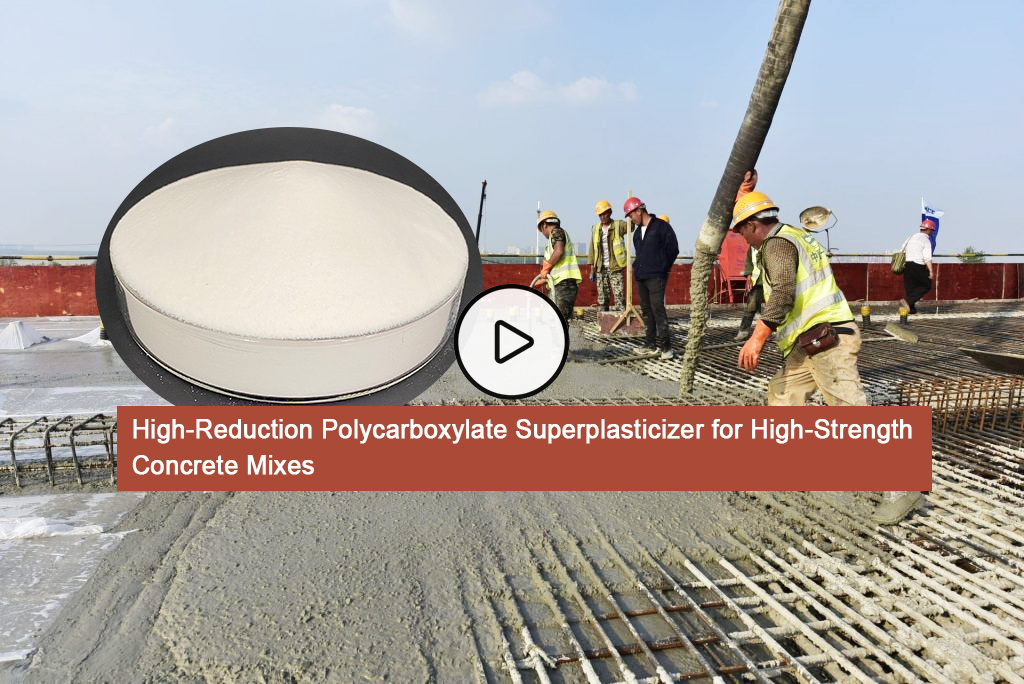
Enhancing Strength, Workability, and Durability in Modern Construction
High-strength concrete demands precision in every component of its mix. Engineers and contractors rely on additives to meet the strict performance standards of today’s projects. High-reduction polycarboxylate superplasticizers stand out as a game-changer in this field. They address the core challenges of High-strength concrete: low workability and high water-cement ratios.
Traditional superplasticizers often fail to balance strength and workability in High-strength concrete. Naphthalene-based additives, for example, offer limited water reduction and short slump retention. This forces workers to add extra water, weakening the concrete’s final strength. High-reduction polycarboxylate superplasticizers solves this issue with its unique comb-like molecular structure.
The molecular design of High-reduction polycarboxylate superplasticizers enables exceptional water reduction rates. Its main chain anchors to cement particles, while side chains repel them from each other. This repulsion prevents clumping and allows the mix to flow smoothly with less water. A test with 0.8% High-reduction polycarboxylate superplasticizers Concentration and 0.29 water-cement ratio achieved a 38% water reduction rate. Most High-reduction polycarboxylate superplasticizers products reach 25% to 45% water reduction in practical use.
Workability is critical for placing high-strength concrete in complex structures. Without proper flow, concrete cannot fill formwork gaps or wrap around reinforcement effectively. At 30℃, High-reduction polycarboxylate superplasticizers maintains 93% of initial slump after 1 hour of placement. It retains slump for 2+ hours, even in warm construction environments. This flexibility reduces construction delays and improves the overall quality of the finished structure.
Strength gain is the primary goal of using High-reduction polycarboxylate superplasticizers in High-strength concrete mixes. Lower water-cement ratios directly translate to denser, stronger concrete. Lab tests show High-reduction polycarboxylate superplasticizers-enhanced mixes reach 60 MPa to 100 MPa at 28 days. One test with High-reduction polycarboxylate superplasticizers achieved 78 MPa, 30% higher than naphthalene-based additives. This makes them ideal for high-rise buildings, bridges, and nuclear facilities.
Durability is another key benefit of High-reduction polycarboxylate superplasticizers in high-strength concrete. Denser concrete resists water penetration, chloride attack, and chemical erosion. High-reduction polycarboxylate superplasticizers reduces 28-day shrinkage by 12% compared to traditional superplasticizers. Projects in coastal areas or industrial zones benefit greatly from this resistance. High-reduction polycarboxylate superplasticizers also reduces concrete shrinkage, minimizing cracks that weaken long-term performance.
Sustainability has become a priority in modern construction practices. High-reduction polycarboxylate superplasticizers supports green building goals by reducing cement usage. Less cement means lower carbon emissions, as cement production accounts for 7% of global CO₂ output. Many High-reduction polycarboxylate superplasticizers products are also formaldehyde-free and non-toxic, aligning with eco-friendly standards.
Proper application of High-reduction polycarboxylate superplasticizers requires careful dosage and mix design. Most projects use 0.5% to 1.5% of High-reduction polycarboxylate superplasticizers by weight of cementitious materials. A C50 concrete test used 5.76kg/m³ High-reduction polycarboxylate superplasticizers with 360kg/m³ cement for optimal results. Over-dosing can cause segregation or delayed setting, so precise measurement is essential. Engineers should test High-reduction polycarboxylate superplasticizers compatibility with local cement and aggregates before full-scale use.
Real-world projects demonstrate the effectiveness of High-reduction polycarboxylate superplasticizers in High-strength concrete. The Hong Kong-Zhuhai-Macao Bridge used High-reduction polycarboxylate superplasticizers to produce High-strength concrete for its offshore piers. These piers withstand harsh marine conditions and meet strict strength requirements. Another example is the Shanghai Tower, where High-reduction polycarboxylate superplasticizers enabled the use of high-strength concrete in its core structure.
Advancements in High-reduction polycarboxylate superplasticizers technology continue to improve its performance. Manufacturers now produce tailored High-reduction polycarboxylate superplasticizers variants for specific climates and project needs. Cold-weather High-reduction polycarboxylate superplasticizers prevents freezing damage, while high-temperature variants maintain slump in hot environments. These innovations expand the versatility of High-reduction polycarboxylate superplasticizers in global construction.
Common misconceptions about High-reduction polycarboxylate superplasticizers often hinder its adoption. Some contractors believe High-reduction polycarboxylate superplasticizers increases costs, but its benefits outweigh the investment. Reduced material waste, faster construction, and longer structure lifespan lower overall project costs. Proper training helps teams use High-reduction polycarboxylate superplasticizers effectively and avoid application errors.
Quality control is vital when using High-reduction polycarboxylate superplasticizers in high-strength concrete mixes. Reputable suppliers provide test reports verifying water reduction rates and slump retention. On-site testing ensures the High-reduction polycarboxylate superplasticizers performs as expected before pouring. This attention to quality prevents costly rework and ensures compliance with building codes.
The future of High-reduction polycarboxylate superplasticizers in High-strength concrete looks promising with ongoing research. Scientists are developing High-reduction polycarboxylate superplasticizers with self-healing properties to repair microcracks. Others are exploring ways to enhance its compatibility with recycled aggregates. These advancements will make High-reduction polycarboxylate superplasticizers even more valuable in sustainable, high-performance construction.
In conclusion, High-reduction polycarboxylate superplasticizers are essential for modern high-strength concrete mixes. They deliver superior water reduction, workability, strength, and durability. By addressing the key challenges of High-strength concrete, High-reduction polycarboxylate superplasticizers helps construct safer, more sustainable, and longer-lasting structures. Its continued innovation will shape the future of construction for years to come.
Нашият професионален технически екип е достъпен 24/7 за справяне с всички проблеми, които може да срещнете, докато използвате нашите продукти.Очакваме с нетърпение вашето сътрудничество!