
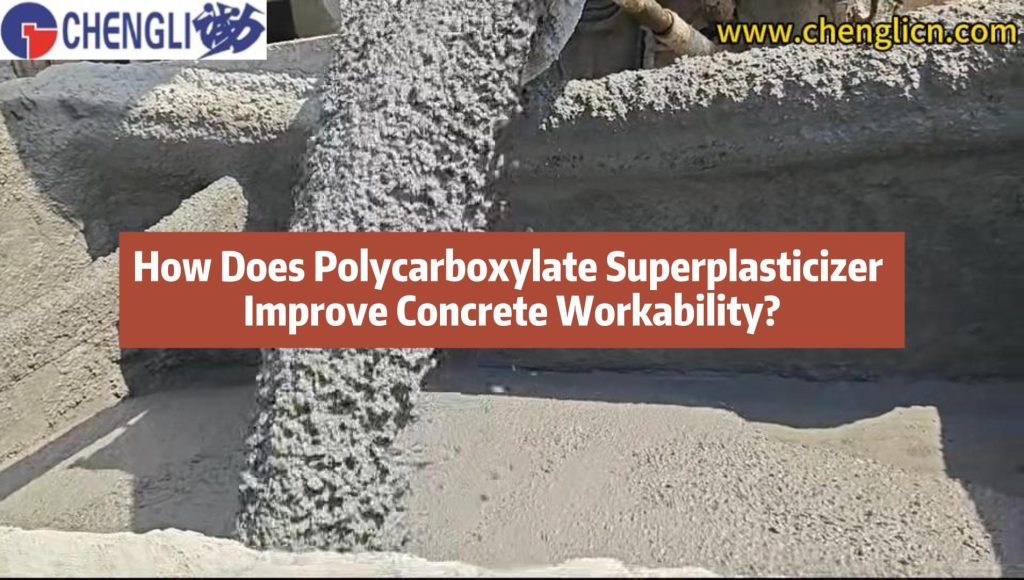
In modern concrete technology, 폴리카르복실산염 고성능감수제 (PCE) stands as a pivotal innovation. It addresses a core challenge: enhancing workability without sacrificing structural strength. For construction professionals, this material transforms how concrete mixes perform on job sites. Its unique properties target the root causes of poor workability in traditional concrete. Understanding these mechanisms reveals why PCE has become indispensable worldwide.
- Molecular Structure: The Foundation of Performance
폴리카르복실산염 고성능감수제 feature a distinctive comb-like molecular structure. This design comprises a main polymer chain and numerous branched side chains. The main chain carries negatively charged groups that bind to cement particles. These groups create a strong anchor, ensuring the molecule adheres tightly to the particle surface. The side chains, by contrast, extend outward into the surrounding water matrix.
This comb structure differs fundamentally from older superplasticizer types. It avoids the limitations of lignosulfonates or naphthalene-based admixtures. The side chains provide a physical barrier between adjacent cement particles. They prevent re-agglomeration, a key factor in maintaining long-term workability. This molecular setup enables PCE to deliver consistent results across varying mix designs.
- Disrupting Flocculation: Unlocking Trapped Water
Cement particles naturally form flocculent clusters when mixed with water. These clusters trap large volumes of free water within their interstices. The trapped water becomes unavailable for lubricating the concrete mixture. This phenomenon directly reduces workability, making the mix stiff and hard to place. PCE interrupts this process through targeted dispersion.
It penetrates the flocculent clusters and breaks intermolecular forces. The negatively charged main chain competes for binding sites on cement particles. It disrupts the electrostatic attractions holding the flocs together. As the clusters break apart, the trapped water is released into the mix. This released water then lubricates individual cement and aggregate particles.
This dispersion effect typically reduces water demand by 20% to 30%. The concrete retains fluidity even with lower water-cement (w/c) ratios. A lower w/c ratio concurrently improves the concrete’s final strength. This dual benefit—workability plus strength—sets PCE apart from other admixtures.
- Enhancing Lubrication: Building Uniform Water Films
Dispersed cement particles each develop a uniform water film coating. The PCE side chains maintain a consistent distance between adjacent particles. This spacing ensures the water film remains intact during mixing and placement. The lubricating effect allows particles to slide past each other smoothly. Even heavy aggregates move more freely within the mixture.
Contractors notice this as improved flowability and spreadability. The concrete pours more easily into formworks, even intricate or narrow sections. It fills corners and gaps without excessive vibration. This reduces labor intensity and speeds up construction schedules. The water film also minimizes friction between particles during placement.
당사의 전문 기술팀은 당사 제품을 사용하는 동안 발생할 수 있는 모든 문제를 해결하기 위해 연중무휴 24시간 대기하고 있습니다. 우리는 귀하의 협력을 기대합니다!